 Tailogue
The things you notice about your pet, kept.
A shared care record. Say what you saw — by voice, by message, or a quick entry — and it stays with its date, its source and your own words, for everyone who looks after them.
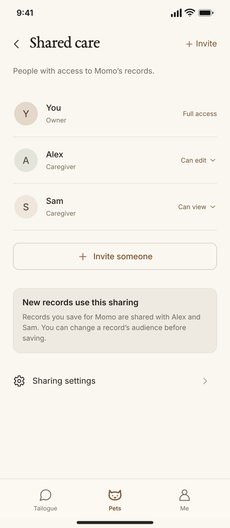
From a note to a record.
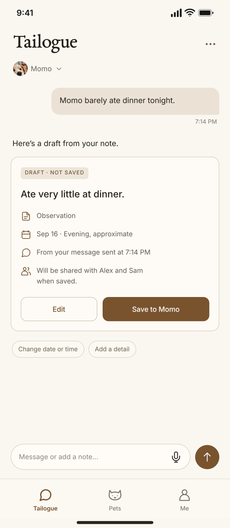
You say what happened. Tailogue writes it down properly, and shows you before it saves.
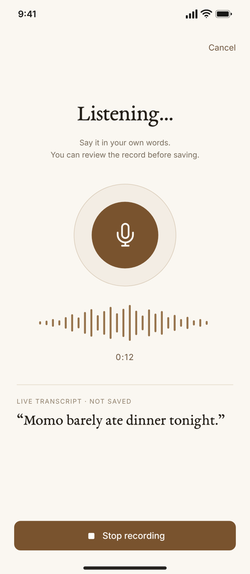
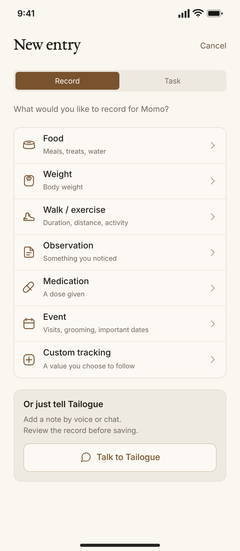
Say it in your own words — a voice note on the walk, a message later, or a type you pick and fill in yourself.
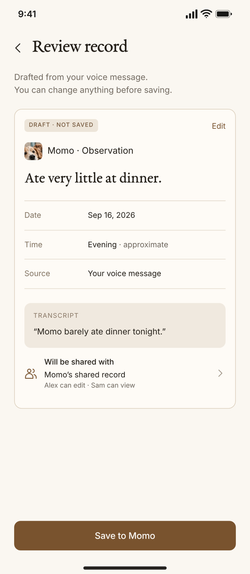
It comes back as a draft: what happened, when, and how sure you were. Nothing is saved until you say so.
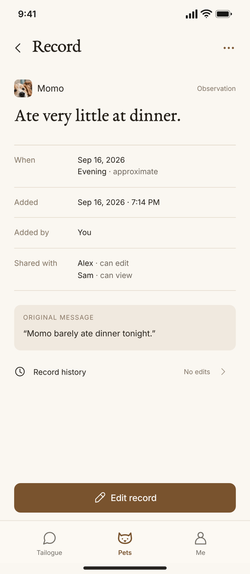
Saved, it keeps who added it, when, and the message it came from. A correction is a new entry; the history stays.
What a record carries.
More than a line of text. On this one draft, before anything is saved:
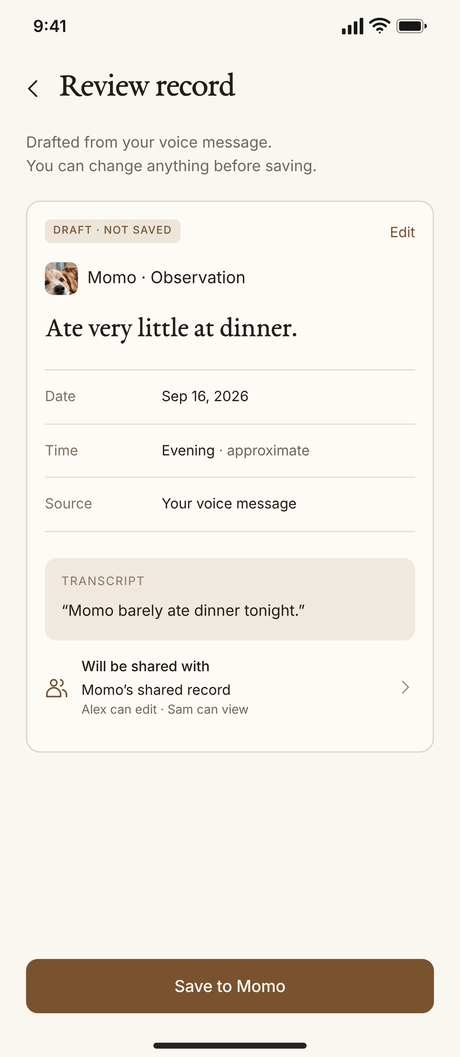
- How sure you were is part of the record, not rounded off.
- Your own words stay attached, next to what was made of them.
- Who will see it is shown before you save, not after.
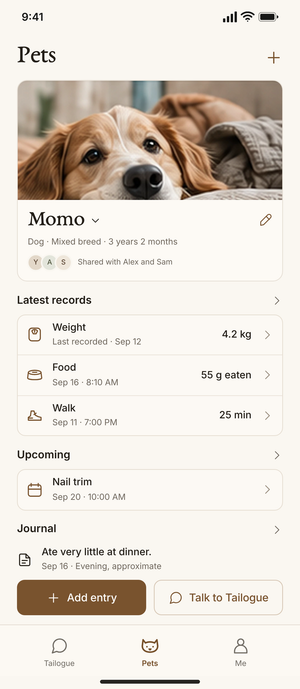
Everything about them, in one place.
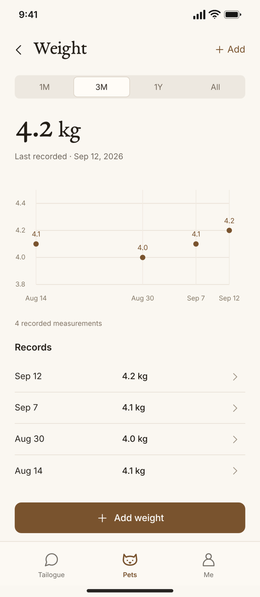
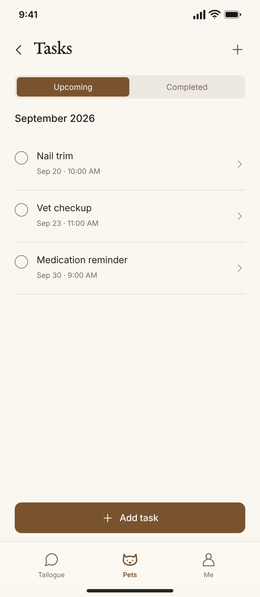
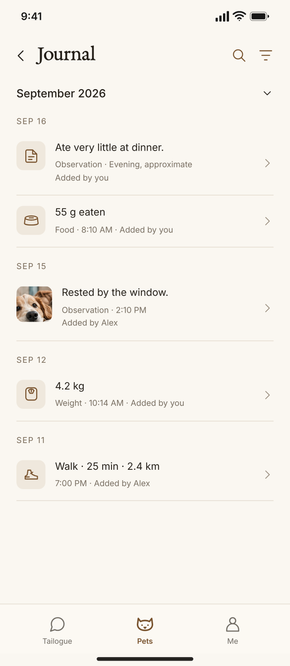
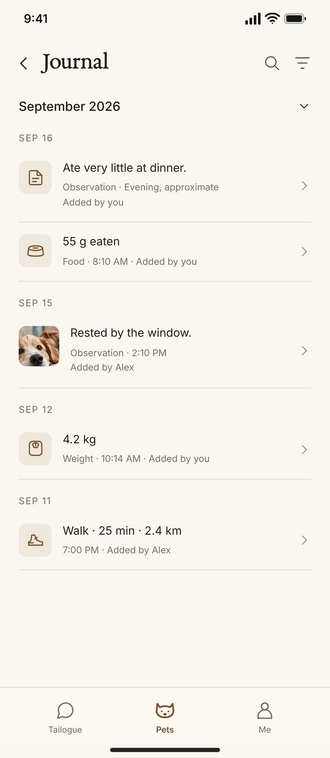
Weight over months. Food and walks by the day. The dose, the vet visit, the nail trim. Enter it yourself in a few taps, or say it and let the draft do the typing — either way it lands in the same record, and the journal reads back by day.
Care, shared.
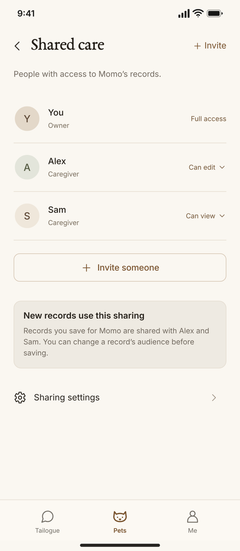
A partner, a sitter, the friend who walks him on Thursdays. Everyone in the household sees the same record, and every entry says who added it and when — so “did anyone feed her?” has an answer.
We remember.
We don’t pretend to know.
We don’t diagnose.
Tailogue counts and dates what you recorded and shows the entries behind every answer. It never names a condition or a cause. When something needs a vet, the answer is a vet.
We don’t overwrite.
A correction is a new entry; the old one stays in the record’s history. What you knew on the day is never rewritten by what you learned later.
Reminders you set are yours.
They go off at the time you set them. Muting the assistant never silences one.
Questions.
Which animals?
Dogs and cats first. The record itself does not mind what species; if you keep something else, tell us.
Do I have to use the assistant?
No. Pick a type — food, weight, a walk, a medication — and enter it yourself. The assistant is one way in, and every draft it makes waits for your yes.
Does it tell me what is wrong with my pet?
Never. It shows you what you recorded, counted and dated. It does not name conditions, causes or likelihoods. For that, a vet — and a record to bring them.
Who can see my pet’s records?
The people in your household, and nobody else. Your records are not public and are not sold.
iPhone or Android?
Both. Two of us build it — one on each phone.
Write to us.
A question, an animal you’d like to tell us about, or a thought about what you saw here. It goes to the two of us who build Tailogue, and we reply to the email you leave.